
Exploring Montréal’s art galleries
Choose an exhibition route, understand different kinds of art spaces and ask useful questions if you consider buying.
Choose the kind of space
A commercial gallery represents artists and sells work. An exhibition centre presents a curated programme. A museum develops collections and temporary exhibitions. Each can be rewarding for a first visit, but their purpose, ticketing and opening arrangements differ. Contemporary art may mean video, sound or installation rather than paintings. Check the project description if your main interest is a particular medium.
A small exhibition can be a twenty minute stop or the beginning of a longer conversation. You do not need to understand everything in advance. Begin with a work that holds your attention and read the artist’s or curator’s description afterwards.
Build a short route
Choose two exhibitions in the same area. Check the exhibition dates and the gap between projects: an institution being open does not guarantee that a new show is installed. Confirm the exact address, admission, accessibility and any timed reservation.
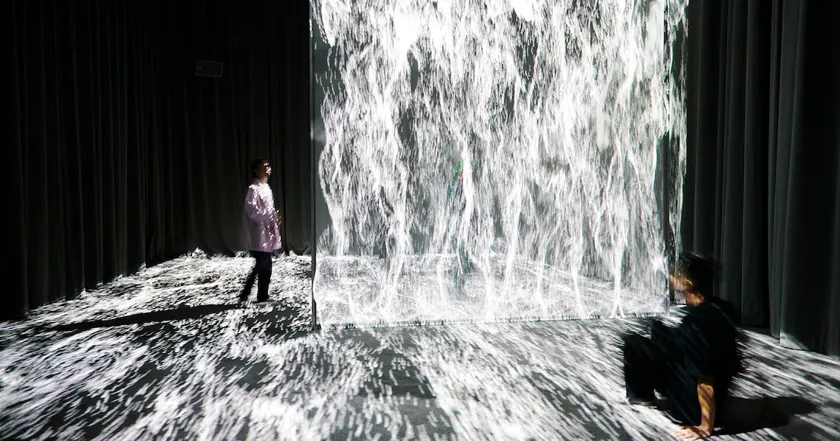
PHI in Old Montréal has different locations and formats, including exhibitions, screen based and immersive projects and performances. Read the specific project page rather than treating the organisation as one commercial gallery. A walk in Old Montréal can fit before or after a reserved session.
Other starting points in the source guide include Galerie Bloom and Galerie Angelina in Old Montréal, Bradley Ertaskiran in Saint Henri, Galerie de Bellefeuille in Westmount, Art Mûr in Rosemont and the Belgo building downtown. Open each gallery’s own current programme and compare the artists and medium. Tourisme Montréal’s art guide can help identify additional spaces.
Looking, asking and buying
Ask whether an exhibition sheet is available and what materials or techniques the artist used. Staff can clarify the work without requiring you to buy. Check photography and publication rules, particularly when other visitors or copyrighted installations are involved.
If considering a purchase, ask for a written price including taxes and a clear description of the author, medium, dimensions and edition. Clarify framing, delivery, insurance and provenance documents. For an edition, understand what the edition number represents and what documentation accompanies it.
A viewing visit and an agreed purchase are different stages. Take time to compare spaces, consider where the work will be displayed and understand payment and delivery terms. A current programme is more useful than a general map ranking, and two carefully chosen exhibitions can be more satisfying than rushing through a long list of addresses.
Sources and further information
English edition updated November 19, 2026. Dated event details and individual source checks are identified in the article; confirm current conditions with the linked organization.